Duck Hunting: A Whimsical Craft Fair Embroidery Design
First Impression: Playful Charm Meets Outdoor Nostalgia
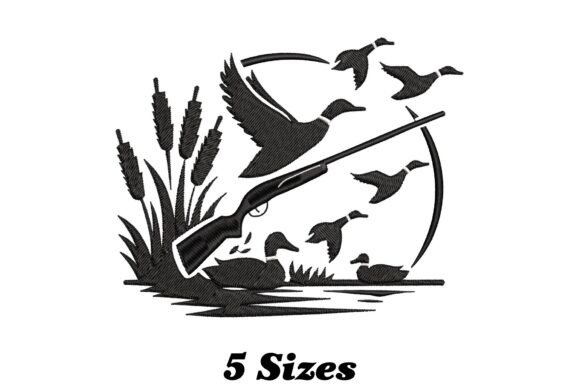
Right off the bat, Duck Hunting lands with lighthearted whimsy—not a stern or literal interpretation of the activity, but a cheerful, almost storybook take. It feels like a friendly nod to rustic camping charm, not competitive sport. That’s smart positioning: it sidesteps niche intensity and leans into broad handmade appeal—think farmhouse kitchens, cottagecore tote bags, and playful outdoor-themed gifts. For craft fair sellers, that means instant emotional resonance with shoppers browsing for personality, not precision.
Where Duck Hunting Shines on Real Craft Fair Products
This machine embroidery design thrives where personality meets practicality. On a natural canvas tote bag? Perfect—centered above the pocket or scaled large across the front, it reads clearly from three feet away and invites smiles. As an apron embroidery piece? Ideal for the chest pocket or lower hem—it adds character without overwhelming function. For tea towel embroidery, it works beautifully in the corner or centered near the top border, especially on linen-cotton blends where stitch definition stays crisp against subtle fabric texture.
As an embroidered patch? Highly effective—especially when backed with iron-on or sew-on stabilizer for durability. Small pouches and pillow covers benefit from its balanced shape and moderate detail; it scales down well without collapsing into blur. And for caps? Use caution: avoid placing it over the curved crown unless you’ve tested hoop placement and stabilizer support—curved surfaces exaggerate stitch distortion on fine details.
What Makes Duck Hunting a Strong Booth & Etsy Seller
It’s glanceable. At a crowded craft fair, buyers scan tables in under two seconds—and Duck Hunting delivers immediate warmth and clarity. No decoding required. That makes it ideal for booth samples: one embroidered tea towel draped over a basket, one patch pinned to a denim jacket, one small pouch beside a set of hand-stamped tags. Each tells a cohesive story—handmade, intentional, joyful.
For Etsy sellers and digital embroidery file shops, it photographs exceptionally well. Its playful composition translates cleanly to printable mockups—no excessive shadows or fuzzy edges to complicate listing visuals. And because it’s not overly dense or intricate, it supports batch production without slowing down your embroidery machine or demanding constant thread changes. That means more finished product per hour—critical when prepping for a weekend market.
Design Assets That Support Scalability
- Clear visual hierarchy: The duck motif reads as a single unit, not a cluster of tiny elements—so it holds up at 3”–5” sizes on patches or pouches.
- Moderate stitch density: Avoids heavy buildup that can stiffen lightweight fabrics or snag on textured towels.
- Adaptable color palette: Works with high-contrast thread colors (e.g., navy duck on cream linen) or tonal stitching (olive on sage) depending on your brand consistency.
- Neutral orientation: Flows naturally on vertical (aprons, pillow covers) and horizontal (tote bags, market bags) surfaces without awkward cropping.
Careful-Use Notes Every Embroidery Designer Should Check
Even charming designs have limits. Before committing to 50 tea towels or listing on Etsy: test Duck Hunting on scrap fabric matching your intended base—especially thick canvas, terry cloth, or dark-dyed cotton. Dense stitch areas may pucker on unstable weaves or sink into plush textures. Tiny details (like beak highlights or feather lines) risk blurring on heavily textured towels or curved cap fronts. If your version includes lettering—even just “Duck Hunting” in a script font—verify legibility at 1.5” height. Small lettering often vanishes on dark fabric without underlay or proper thread contrast.
Also consider hoop size. If the design pushes close to 4x4 or requires re-hooping for multi-position stitching, factor in extra time per item. That impacts your craft fair prep timeline—and your ability to offer same-day personalization.
How Duck Hunting Elevates Your Handmade Product Line
It adds visual rhythm to your booth display. Pair it with neutral-toned linens and wood accents, and Duck Hunting becomes a focal point—not loud, but memorable. It signals craftsmanship without shouting “expensive.” Customers associate its whimsy with care, not cuteness-for-cuteness’-sake. That perception lifts perceived value: a $28 embroidered tote feels like a considered gift, not a generic accessory.
For boutique makers building brand consistency, it slots neatly into seasonal rotations—spring markets, camping-themed pop-ups, or fall harvest fairs. It doesn’t lock you into one aesthetic; instead, it flexes across rustic, modern farmhouse, and even minimalist palettes when executed with restrained thread choices and clean finishing.
Essential Embroidery Designer Checks Before Production
- Test the embroidery file on scrap fabric matching your final product’s weight and texture.
- Confirm thread contrast—especially on dark or busy prints—using real thread, not screen previews.
- Review spacing between elements: tight gaps may merge on low-tension machines or soft stabilizers.
- Verify hoop size compatibility and whether the design fits your most-used hoops without rotation or re-hooping.
- Inspect stitch density in key zones—avoid unexpected fill-heavy sections that compromise drape or comfort.
- Use appropriate stabilizer: tear-away for stable wovens, cut-away for knits or stretchy fabrics, and topping for napped or textured surfaces.
- Create at least one real-world mockup—not just a digital preview—to assess scale, proportion, and tactile impact.
- Compare how it looks on multiple fabric colors; a design that pops on oatmeal linen may disappear on heather gray.
- Confirm commercial licensing terms before selling finished products—this is non-negotiable for Etsy sellers and wholesale partners.
Bottom line: Duck Hunting isn’t just another camping-themed embroidery file. It’s a versatile, emotionally intelligent design asset—one that balances handmade authenticity with smart commercial execution. When thoughtfully applied, it turns everyday items into conversation starters, builds repeat interest at craft fairs, and strengthens your identity as a designer who understands both stitch and shopper.