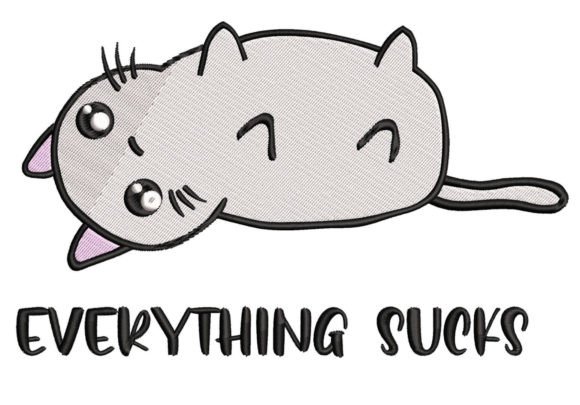
Everything Sucks
First Impression: Bold, Witty, and Instantly Relatable
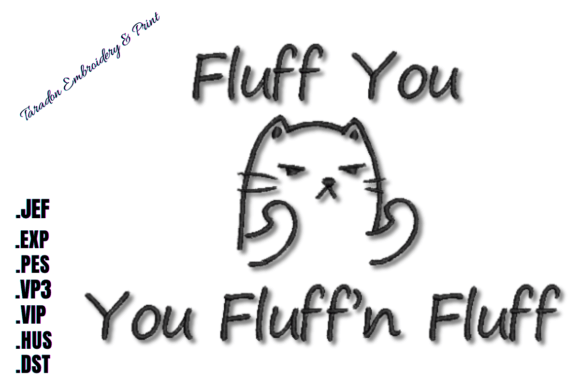
As an embroidery designer who’s prepped over 200 craft fair booths—and shipped thousands of embroidered tote bags, tea towels, and patches—I’ll cut straight to it: Everything Sucks lands with a smirk, not a sneer. It’s bold without being abrasive, witty without trying too hard, and feline-forward in the best possible way. The phrase “feline fortitude” in the description isn’t fluff—it signals resilience wrapped in soft fur and dry humor. This isn’t a sarcastic meme stitched on cheap polyester; it’s a handmade product that balances levity and craftsmanship. At a crowded market, where shoppers scroll past dozens of floral monograms and rustic quotes in under three seconds, Everything Sucks stops them. Not because it’s shocking—but because it’s human, and cats make it kind.
Where It Shines: Craft Fair Product Placement
On a well-curated booth table, Everything Sucks performs strongest when scaled intentionally. A 4.5"–5.5" version on a natural linen tea towel? Perfect—visible from six feet, legible at arm’s length, and emotionally resonant in the kitchen aisle. As an apron embroidery centered just below the pocket? Yes—especially on charcoal or oatmeal cotton twill, where the contrast reads cleanly and the cat’s expression stays expressive. As a 3" embroidered patch sewn onto a denim tote? Absolutely. That size lets the phrase pop while keeping the feline silhouette intact. Smaller than 2.5"? Risky. Tiny lettering and dense stitch areas in the cat’s fur or whiskers can blur on textured towels or curved cap surfaces—more on that shortly.
Tote Bag Design & Apron Embroidery: High-Visibility Anchors
A tote bag with Everything Sucks becomes a conversation starter—not just a carrier. Buyers love wearable irony, especially when executed with precision. For aprons, position the design high enough to avoid splatter zones but low enough to be seen when the wearer is standing. Avoid placing it near seams or darts where distortion can stretch the cat’s face or thin out the lettering. Both products benefit from moderate stitch density: enough to hold shape on medium-weight fabric, not so dense it feels stiff or hides thread texture.
Tea Towel Embroidery & Pillow Covers: Texture Matters
Linens and terry-cotton blends are forgiving—but Everything Sucks demands attention to fabric texture. On highly napped or looped tea towels, test stitch first: small lettering may sink between loops, and fine details in the cat’s eyes or paw pads can vanish. Pillow covers in velvet or bouclé? Skip it. Stick to smooth cotton sateen or medium-weave canvas where the machine embroidery design reads crisply. For Etsy sellers, this means your printable mockup must reflect real-world fabric behavior—not just a flat white background.
What Holds It Back (And How to Fix It)
The biggest production red flag? Dense stitch areas. If the original embroidery file packs tight satin fills into the cat’s ears or layered fur, it’ll pucker on lightweight cotton or bleed on dark fabric. Likewise, tiny details—like individual whiskers or subtle shading—won’t survive shrinking below 3". And yes, “Everything Sucks” looks great in charcoal thread on ecru linen… but try it in light gray on navy twill, and you’ll lose half the impact. Always test thread colors against your actual fabric swatches—not your screen.
Commercial Realities: Licensing, Clarity, and Consistency
If you’re selling finished products—not just the digital embroidery file—you need confirmed commercial licensing. No exceptions. Many small shop owners assume “personal use only” files are safe for craft fairs; they’re not. Also, ask yourself: does Everything Sucks align with your brand voice? A cottagecore apothecary booth might clash with its tone, while a modern minimalist stationery + textile line? Natural fit. Consistency builds trust. One Everything Sucks pillow cover among ten lavender-scented sachets feels jarring. But paired with two matching embroidered pouches and a limited-run tote? Cohesive, memorable, booth-strong.
Design Assets You Can’t Skip
Before cutting your first hoop, do these five things:
- Test the design on scrap fabric matching your final product—same weight, same weave, same dye lot if possible.
- Check thread contrast under both daylight and warm booth lighting. What reads bold at noon may disappear under string lights.
- Review spacing: Are letters evenly kerned? Does the cat’s tail clear the “S” in “Sucks” at full scale?
- Confirm hoop size fits your machine’s throat space—and that the design doesn’t require re-hooping mid-stitch.
- Use the right stabilizer: tear-away for stable cottons, cut-away for knits or stretchy blends, and ultra-stable for textured towels.
Final Verdict for Creative Entrepreneurs
Everything Sucks is a smart, scalable, emotionally intelligent addition to any handmade product line—if treated with intention. It’s not filler. It’s not ironic wallpaper. It’s a small moment of shared truth, stitched with care. For Etsy sellers, it converts well in listings with authentic lifestyle photos—not flat lays alone. For boutique makers, it adds wit without sacrificing quality. And for craft fair sellers? It’s the item people point to, laugh at, then buy on impulse… then come back for a second in a different colorway.
Just remember: clarity beats cleverness every time. If the phrase blurs, the cat fades, or the thread sinks into the fabric, the message gets lost. So test early. Stitch slow. Sell with confidence. Because when Everything Sucks is done right—it absolutely sells.