Fluff You Cat: A Designer’s Real-World Embroidery Review
First Impressions: Playful, Purr-fectly Balanced Humor
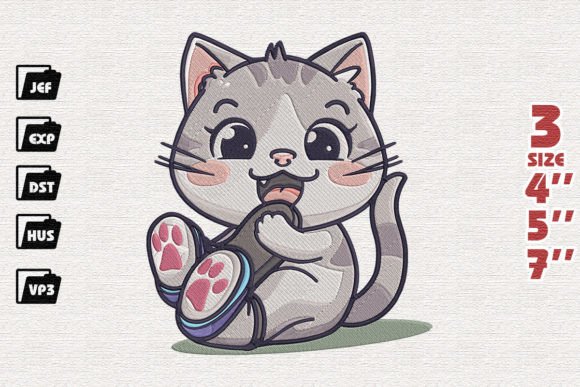
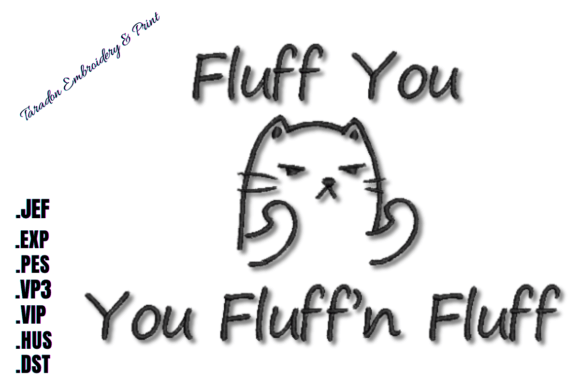
When Fluff You Cat landed in my inbox, I paused—not because it was flashy, but because it *felt* familiar. That rare kind of design that lands somewhere between a wink and a warm hug: soft edges, implied fluffiness, clever phrasing, and just enough visual wit to spark a smile without tipping into sarcasm. As a designer who’s stitched hundreds of cat-themed pieces for boutique clients and Etsy sellers, I know how easy it is for “cute” to slip into cloying or “funny” to read as forced. Fluff You Cat avoids both traps. Its layout leans slightly asymmetrical—tail curling, ears perked, text integrated like part of the silhouette rather than tacked on—which gives it movement and personality. It reads instantly as embroidery, not vector art masquerading as stitchwork.
A Tote Bag Test: Where Personality Meets Practicality
Last week, I prepped a custom order: a set of linen-cotton tote bags for a local indie bookstore’s “Cat Lover’s Book Club” launch. I chose Fluff You Cat for the front panel—not as a throwaway joke, but as a signature detail. Why? Because it scaled beautifully at 4.2" wide (my go-to size for center-chest placement), held clarity in both satin-stitched outlines and delicate fill-stitch fluff textures, and didn’t drown the fabric’s natural weave. Customers responded immediately: “Oh! That’s *us*,” one said, tapping her chest. That’s the quiet power of this design—it doesn’t shout; it invites recognition. For small shop owners and Etsy sellers, that kind of emotional resonance translates directly to repeat buyers and social shares.
Where It Shines (and Where It Asks for Care)
Fluff You Cat performs exceptionally well across common handmade product categories:
- Custom apparel: Looks crisp on mid-weight cotton sweatshirts and structured tees—especially with tonal thread (e.g., heather grey thread on charcoal fabric) to emphasize texture over contrast.
- Embroidered patches: Holds shape beautifully when cut and heat-applied. The compact composition avoids awkward clipping around tight curves.
- Baby embroidery: Works well on organic cotton onesies and burp cloths—just avoid dense fill areas near seams where stiffness could irritate sensitive skin.
- Holiday & gift items: Stitches cleanly onto tea towels, pillow covers, and mini blankets. Its lighthearted tone fits perfectly with non-traditional gifting—think “new cat parent” instead of “Christmas.”
But—and this matters—Fluff You Cat isn’t universally forgiving. On stretchy knits (like lightweight jersey), the satin-stitched lettering can pucker if stabilizer isn’t layered thoughtfully. On dark, napped fabrics (e.g., fleece or heavy terry), those fluffy fill-stitch zones may lose definition unless you boost contrast with brighter thread or add a subtle underlay. And while it’s charming at 3", tiny details—like the whisker lines or inner ear texture—start to blur below 2.5". So for caps or curved surfaces, stick to 3.5" minimum and test hoop alignment carefully.
What It Does for Your Craft Business—Beyond the Stitch
As someone who consults with makers launching embroidery-based product lines, I watch how designs affect perception. Fluff You Cat elevates a simple tote bag from “handmade” to “thoughtfully made.” Its balance of whimsy and craftsmanship signals attention to detail—something customers pay more for, especially in premium handmade markets. For Etsy sellers, it’s a strong thumbnail candidate: readable at small sizes, distinctive in mockups, and emotionally sticky enough to reduce bounce rates. For boutique branding, it pairs effortlessly with minimalist typography or earthy palettes—no redesign needed.
It also builds trust. When a buyer sees consistent, clean stitching on something playful like Fluff You Cat, they assume the same care went into your pricing, packaging, and follow-up. That’s intangible—but real.
Designer Notes You’ll Actually Use
Before stitching your first Fluff You Cat project, do these five things:
- Test on scrap fabric—same weight and stretch as your final piece. Watch how the fluff-texture fills behave under tension.
- Check thread color contrast on both light and dark backgrounds. Some versions of this design rely on subtle tonal shifts—those vanish on low-contrast combos.
- Review stitch density. If your machine struggles with dense fills, consider simplifying inner fluff zones manually—or confirm whether the file includes a low-density alternate version.
- Confirm hoop size compatibility. While it scales well, the original file may be optimized for a 5x7"—not ideal for smaller hoops used on collars or cuffs.
- Verify licensing before selling finished products or digital embroidery files. This is a commercial embroidery design, not clip art—respect the creator’s terms, especially if you’re reselling digital assets or bundling with kits.
The Bottom Line for Makers Who Stitch With Intention
Fluff You Cat isn’t just another cat embroidery file. It’s a conversation starter, a brand enhancer, and a quietly versatile design asset—one that earns its place in your digital library because it works *with* your process, not against it. It respects fabric, honors stitch mechanics, and never asks the maker to overcompensate for weak structure. Whether you’re embroidering baby onesies for a new client, prepping holiday stock for your craft fair booth, or building a cohesive line of embroidered home goods, Fluff You Cat delivers charm without compromise. Just remember: great embroidery starts with smart choices—not just cute ones. Test it. Trust your stabilizer. And let the fluff do the talking.